Leadership
Education For All
The South Carolina public education system is vital because it serves
all students regardless of their background to prepare them for college and
or the workforce. According to the South Carolina Department of
Education’s 2023-2024 Active Student Headcounts, our public school
districts currently serve approximately eight hundred thousand students
across the state. K-12 students in South Carolina spend a large portion of
their time in school and participating in school-related activities. However,
the South Carolina public school system is known to be one of the worst in
the United States. You may wonder how well each public school district
provides for its students. Do all students receive the same opportunity? Well, these questions have been one of the primary concerns of citizens, politicians, lobbyists, and many more across South Carolina.
When we discuss the issue of inequalities in the South Carolina public education system, one phrase typically comes up: The Corridor of Shame. The Corridor of Shame is an impoverished, rural region along I-95 known for its historically inequitable school funding and poor student achievement. Based on the information provided by South Carolina StateHouse.gov, the top ten school districts with a poverty level between 90-99 percent are all located within the Corridor of Shame. The schools here are chronically underfunded and lack the proper resources necessary for students to thrive. The lack of funding and resources can have grave impacts on a student’s future, such as a lack of school buses, inadequate public school buildings that lack sufficient utilities, and teachers who aren’t properly certified or adequately paid. Public school facilities across the state are built using local tax dollars, not the state’s, which has led to drastic inequalities in the funding of school districts across the state.
The issue of underfunded school districts is not restricted to the Corridor of Shame. The school district within the same city as the University of South Carolina had a poverty index of nearly 75 in 2017, and in 2019, nearly 30% of all students ages 5-17 in the district were experiencing poverty (Source #1 and Source #2).
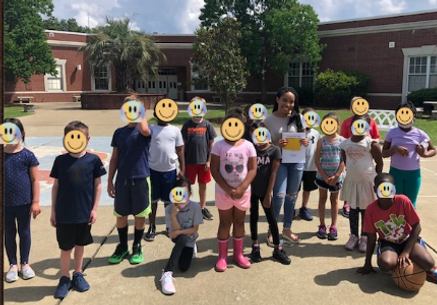
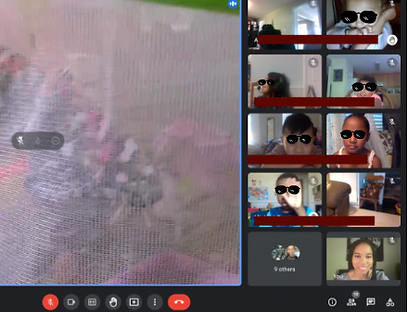
In 2020, I was a Teacher Cadet for a second-grade class in Lexington Richland School District 5. I have covered their faces for their privacy
Public Education Partnership Program
RECOMMENDATION & SOLUTION
My goal is to create a mentorship program that addresses the systemic inequalities in the South Carolina public education system, starting with Richland School District 1. This program will connect local middle and high school students with the University of South Carolina undergraduate students as mentors. Through tutoring, advocacy, and community engagement, the program aims to empower local students to understand that college can be an option for them if they choose to pursue it and give students the skills necessary for success in college.
This program will be created in partnership with the University and any student organization that would like to partner with the program. College students will be able to earn service hours in exchange for providing tutoring and academic support to local schools in Richland District 1. Depending on the availability of the local school and the college students, the undergrads will carpool to the local school once a week, either during the school day or during after-school hours. The volunteers will provide one-on-one tutoring, homework assistance and lead educational games and activities.
Once a month, we will have a college readiness session where students will learn from the experiences of the volunteers, admissions reps, or other faculty and staff. At the end of each semester, students and volunteers can participate in a college-readiness retreat. During Fall or Spring Break, students will have a chance to spend two days on campus. The volunteers will serve as their camp counselors, escorting the students to and from their sessions focused on college preparation across campus. One session will be for juniors in high school, and the other will be for eighth graders. Both sessions will be catered to the ages of the participants. For example, the session for eighth-graders will introduce them to how to prepare for college on a surface level, mostly emphasizing the necessity of maintaining good grades once they get to high school and how to do so. The session for juniors will teach them more about financing college, the application process, and standardized testing prep. Overall, the retreat will offer workshops, campus tours, and exposure to college life to inspire students to pursue higher education.
In Key Insight #1, I discussed how, in SPCH 145: Online Public Communication, I learned how communicators can use Aristotle’s three elements of ethos–competence, values, and community to establish credibility. I was able to incorporate this theory while developing compelling speeches, such as my live policy discussion with my peers, during which I advocated that when the South Carolina state government passes the appropriations acts, they should include a greater allocation of funds to underprivileged K-12 public schools, especially along the “Corridor of Shame” in South Carolina. Undergraduate student volunteers will also be able to participate in a letter-writing campaign to the state legislators to address this need.
In Key Insight #2, I discuss the relevance of the Agenda Setting Theory in public relations. I will need digital marketing material to recruit volunteers and students willing to participate in the program. I will first begin with flyers to recruit participants. However, once the program is in full swing, it will be beneficial to create an Instagram page. This ties into the Agenda Setting Theory because, with Instagram, I will create graphics and posts highlighting the good the program is doing for our community. I will also create infographics with statistics about education inequalities in South Carolina. So, when the public views our information, they will see the need for programs such as ours and think highly of the work we do. This will hopefully result in more volunteers and donations so the program can expand over the years.
Public Education Partnership Program
IMPLEMENTATION PLAN
Who: First, I would need to recruit undergraduate students, faculty, and community volunteers to serve as mentors and facilitators. To do this, I would meet with UofSC student organizations that require service hours. I will create a presentation explaining the need for a program such as the one being created, explain what would be required of a mentor, and offer them the invitation to partner with me on this initiative. I would also explain to the student organizations that this would be a partnership between their organization and this program. It would be a means for their members to earn service hours. Next, I will contact local high schools and middle schools in Richland School District 1 to see if they would be willing to partner with our program. In the first year, I would start with one high school and one middle school in Richland School District 1. As the number of volunteers increases, so will the number of schools we partner with.
What: Establish a mentorship program focused on enhancing educational equity and college readiness for students in Richland School District 1. Regarding the topics and curriculum the mentorship program will cover, our program will be flexible, working to address the needs of our students. For instance, I, along with the assistant students in the College of Education, would work on a general curriculum for the mentors to cover in the beginning. However, as the program progresses and if the mentees demonstrate a greater need in one area over another, we will add the necessary materials. In addition to meeting with the students, the mentors will have a weekly mentor meeting in which we will cover curriculum adjustments, reflections on the week's meeting with the mentees, and goals and implementation methods for the week ahead.
Where: Volunteers will be undergraduate students at the University of South Carolina who will mentor students in Richland School District 1. We plan to expand to other districts facing similar challenges.
Timeline: I aim to launch the mentorship program within one year of initial contact with the local schools. So, I will contact the local elementary schools and the necessary University staff members one fall, and the program will begin by the start of the next school year. Once we establish partnerships with the schools and gather at least 20 volunteers at UofSC, volunteers will spend about a month in the necessary training. We will not launch the retreats until the second year.
Transportation: Students will carpool to and from the schools. As the program grows, we hope to receive funds to purchase a bus and hire a driver.
Funding: Students will receive volunteer hours for their time. As for the retreat, volunteers will also spend the first two years fundraising. Fundraising will include bake sales, GoFundMe, percent nights at local restaurants, applying for grants, and contacting local businesses for sponsorship.
Materials: I will create flyers and digital advertising to spread the word about this program and recruit volunteers.